
Cognitive behavioural Therapy (CBT) is one of the most well-known therapeutic approaches to help treat various mental health concerns including anxiety, depression, Obsessive Compulsive Disorder (OCD) and substance use. Since the establishment in the 1960’s by psychiatrist Dr. Aaron Beck, there is now an abundance of information about this approach – maybe too much that it can be hard to decide whether it would be something you are interested in for your counselling or healing approach.
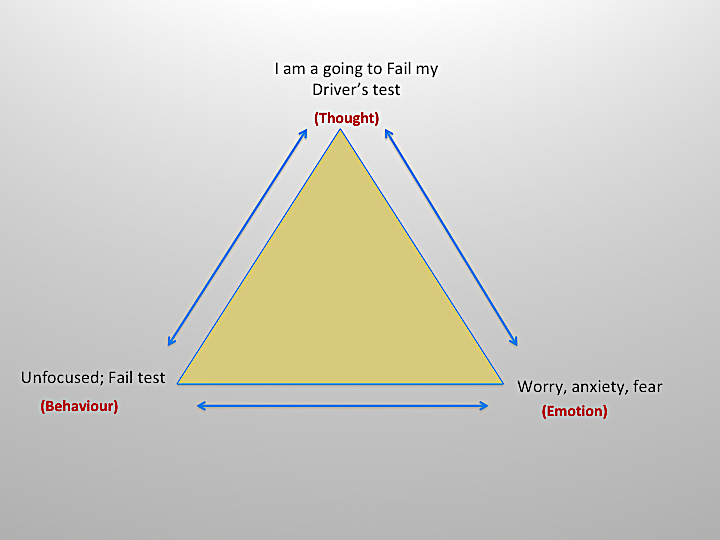
CBT is based in a cognitive model that our thoughts influence how we feel (emotions) and thus, influence our behaviours. One of its fundamental assumptions is that how we think or perceive situations, events, or experiences is more connected to our beliefs and our reactions to situations more so than the situation itself (beckinstitute.org).
If you are someone considering attending a CBT group or want your counsellor to use CBT in your therapy sessions, here are some points to note in regards to this common therapeutic approach.
Key Concepts
Automatic Thoughts: Thoughts that pop up without conscious thinking. When certain thoughts become so routine that your brain does not need much thought to go directly to them – they are “automatic.” CBT is a therapy approach that helps individuals become aware of automatic thoughts and how they relate to our actions and consequently how we feel.
Core Beliefs: From early childhood, we develop certain ideas and understandings of ourselves and the world around us that these ideas and beliefs can become so deeply rooted making it difficult to believe any different. CBT uses Core Beliefs as an important way to decipher where a problem may be stemming from in an individual, and the type of influence those core beliefs may be having on a person.
Cognitive Formulation: On the website beckinstitute.org, you can find a simple diagram to really get a sense of the foundation of CBT using Beck’s Cognitive Formulation. Here is an example:
A Situation occurs – Our Automatic Thought(s) come up – We React (emotionally, behaviourally, psysiologically)
See link to article https://beckinstitute.org/wp-content/uploads/2015/11/Basics-and-Beyond-Chp-3-Cognitive-Conceptualization.pdf
Some Assumptions of CBT:
Faulty Thinking: A lot of the historical CBT explanations talk about how CBT assumes that when people have negative thinking or interpretations that the individual has faulty thinking – as if your thoughts may be wrong or not normal. Additionally, it can be interpreted that CBT assumes that you have a psychological problem or mental illness if you have faulty thinking. However, with CBT evolving over many decades, we have learned that there is a lot more to CBT than just if you have bad thoughts you have a psychological problem. But to someone very new to CBT, some of the ways CBT is described can lead one to think that.
Now-a-days, CBT is still a widely used approach and has a lot of evidence based research behind it. It is also evolving as more research is being done. Thus, CBT therapists using this approach can help individuals reframe thinking patterns that may not be helping the individual, ultimately reaching what the client’s core belief behind the thinking may be and reevaluate it.
Goal-Oriented: Short-term counselling can be very much preferred if you have a specific problem you want to tackle that does not require a lot of deep rooting or trauma processing. CBT is an approach that is big on goal setting and tackling those specific goals. This is definitely advantageous if you already know what you want to change, but sometimes individuals who attend counselling do not know what they want to change and the sessions are used to help discover what may not be working for them in that moment. However, CBT can definitely help one to identify thoughts, emotions and behaviours that have been unhelpful to an individual.
Short-Term & Structured Therapy: As previously mentioned, short-term counselling can be very desired in a counselling approach. CBT is an approach to therapy that is more structured and brief, therefore typically yields 6-8 sessions. This can be a pro and a con depending on what you prefer – some prefer short-term counselling because then you know that you do not have to attend a lot of sessions but will still get a lot out of those few sessions. One potential downside to learning a lot in a short amount of time is that it can be difficult to process all the information cohesively to make it applicable and effective to your situation. Additionally, the retention of information long after you have attended CBT may decline if the practice of strategies is not regularly maintained. In general, the effectiveness of CBT and its techniques are largely based on whether individuals can maintain doing the exercises even after the sessions have completed. This leads to my next point”…
Homework/Practical Interventions: CBT is an approach that is quite often characterized for its homework. For some, this would fit well if you like to do homework at home from sessions and want those practical strategies. It can be very beneficial to have take-home strategies because then we are more likely to practice, thus re-train our brain to gravitate toward these helpful coping techniques rather than the ones that weren’t working for us before. Some of them may not be the most fun, but they are designed to help you become more aware of automatic thoughts and the subsequent feelings and behaviours.
Some examples of these techniques include:
1. Thought Log:
A “Thought Log” is way of tracking your thoughts to a situation and the resulting behaviour/mood. Examples of what you might track on a CBT Thought Log may include:
- The hard/challenging situation or event
- The thought that came up
- Your action, behaviour or response
- How you felt; what emotion did you feel
- The resulting outcome
- Thinking of an alternate thought and the resulting behaviour
There are various versions of these Thought Logs depending on what workbook you are using or website you look at.

2. Experimentation or Exposure:
Another common and practical technique in CBT is Experimentation or Exposure therapy. Often if a person is afraid or avoids certain situations, CBT exposure interventions help to guide the individual to gradually approach those situations so the fear reduces. It is important to note that some exposure interventions are best suited to have a professional guide you through it. For example when individuals have been in a horrifying car accident that has left a deep fear of either getting into a car or driving a car, CBT exposure therapy can help an individual after a terrifying car accident to be able to conquer some of the imposed fears of driving while doing it safely with a professional there with them.
These practical strategies can be a great investment on the ability to cope with distressing or unhelpful thoughts/emotions/behaviours. The skills you learn in CBT you can take and have forever, applying them whenever hard situations come up in your everyday life. Compared to other therapeutic approaches though, CBT is definitely one that you will find homework so that it increases the potential for maintaining your desired change.
Here To Help is a website that provides more examples of CBT interventions https://www.heretohelp.bc.ca/cbt-practice
Evidenced-based: There is a lot of research out there on CBT! With the many decades it has been around, there has been plenty of opportunity for its approach to be researched and tested. So if it is an approach you are interested in, it is one that has significant research to show its usefulness, but also some of its weaknesses. Further generations (or waves) of CBT have also been developed. These newer denominations of CBT have brought Acceptance and Commitment Therapy (ACT) developed by Steven Hayes, as well as Dialectical Behavioral Therapy (DBT) developed by Marsha Linehan. Mindfulness-Based Cognitive Behavioural Therapy is also a feature of CBT with the emphasis on mindfulness to help with intrusive thoughts used commonly in substance use or anxiety interventions.
Lastly,
It is important to note that research has shown that no one therapeutic approach is more effective than others. What is key in any counselling experience is the relationship one has with the counsellor/therapist or facilitator of a group therapy program and making sure whatever therapist you choose, you feel a fit with. Some therapists may have a specialty or more extensive knowledge in one approach over others, but training to become a therapist, we learn about all the different therapeutic approaches and thus, our goal is to work in a way that will fit with the clients’ needs whether that is applying CBT approaches or taking a narrative, ACT or other therapeutic based approach if necessary and appropriate. If a therapists’ approach or training does not align for the client, the therapist can help guide the client in finding a better fit.

