
At the end of 2019, I stumbled across a journaling method that combines journaling, productivity and mindfulness. As I became more interested in bullet journaling, I found myself caught in the vortex of YouTube, watching endless amounts of videos on what it’s all about and how others create their personalized bullet journal.
Origins of the Bullet Journal Method:
Ryder Carroll, a digital product designer and author created the methodology of bullet journaling to foster intentional living. On his website bulletjournal.com, the methodology is described “as a mindfulness practice disguised as a productivity system.” A system to help organize and plan our days, weeks, months, years with purpose and intention by knowing the “what” while remaining mindful of “why” (bulletjournal.com). Carroll also developed an analog system that helps with keeping track of the past, prioritizing the present, and planning for the future. Here’s a snippet of the analog:
- Tasks to be completed, – Notes, O Events, X Task completed
Some bullet journals will already have a “Key” in the journal listing all the symbols in the analog system. You do not have to use the analog system, the purpose of the bullet journal is to have it function in a way that will be useful to you.
Benefits to Using a Bullet Journal:
1. Creative Expression
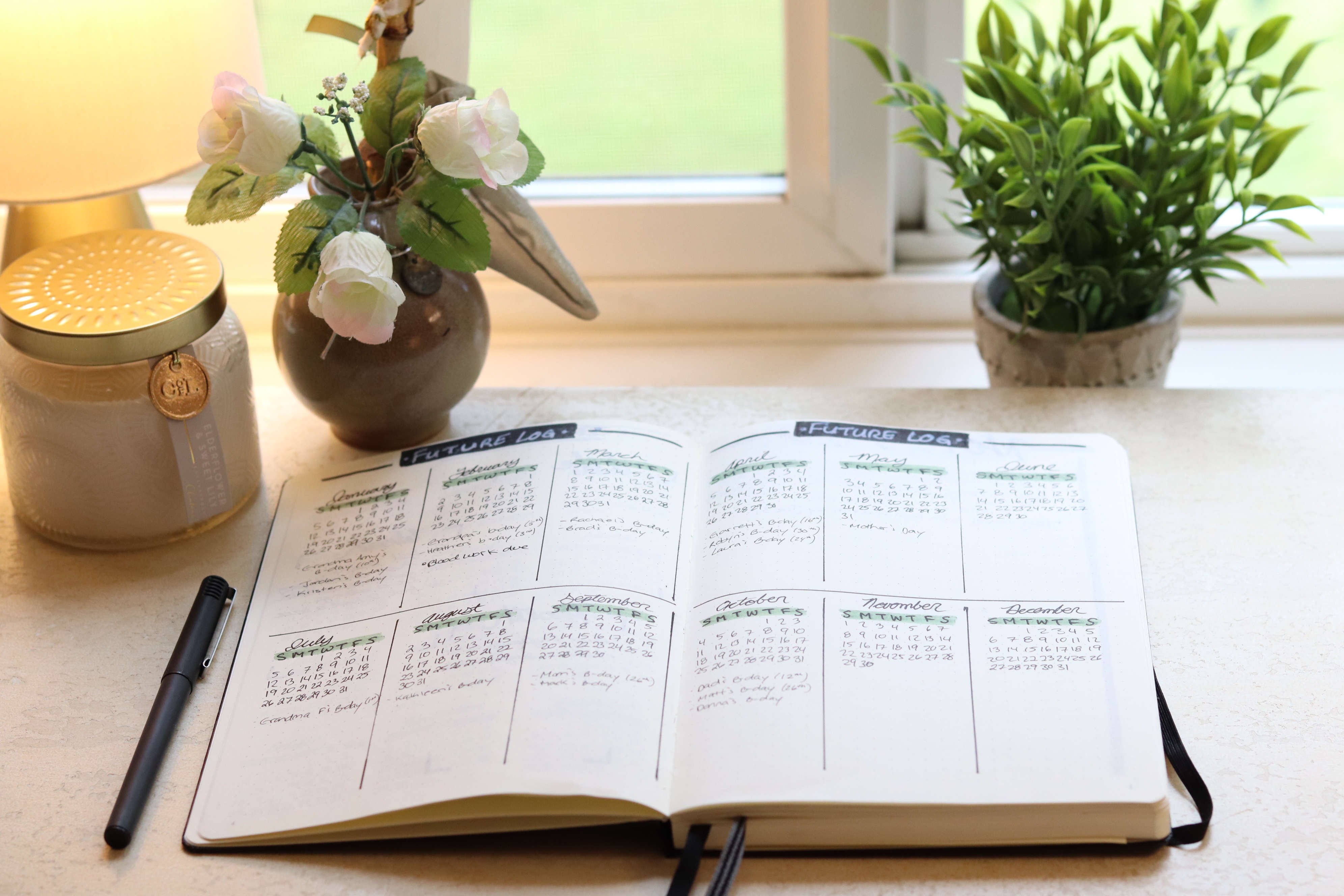
The first feature that I like about bullet journaling is the creativity for planning. You can design your page spreads any way that suits you. I am not very artistic, so I kept mine minimalistic. But if you are a creative and artistic person, the bullet journal can be a great way to showcase as art but also be a functional practice in your day to keep you on track with your intentions.
There are many examples on YouTube or Instagram showing various themes people have done for each month or one consistent theme for each year (ex: March having a flower theme to represent Springtime).
2. Track Intentions and Goals
Productivity is a central element of the bullet journaling method. Therefore, in order to be productive, we need to have some intentions or goals for ourselves. So when you set your intentions and/or goals, try and set ones that are meaningful to you. They could be intentions for your health, for school or work, or to add more or less of something in your life.
Another helpful aspect of tracking goals and intentions is that the analog system (if you choose to use it) can help flag when we need to migrate goals into subsequent months, or whether certain goals are too big and we need to break them apart even more. By seeing our intentions laid out on paper, it provides the opportunity to look back and reflect on it. This can help us determine if we need to re-evaluate, re-prioritize or if we are on track.

3. Track Habits
Another great function of the bullet journal can be to track habits. You can create “Habit Tracker” pages for whichever habits you want to track. I based mine on the activities or behaviours I want to do more of. For instance, how many days in a month I read a book, practice mindfulness, and exercise. I have been tracking habits monthly, but it can be weekly or daily. Each new month you can then reassess which habits to continue to track or if there are new habits to add or replace.
Tracking habits that you want to reduce or get rid of such as screen time, shopping, drinking alcohol, or even mental habits like being self-critical or having anxious thoughts can also be tracked. Bullet journaling is a great resource to visually see when you are on track of doing what you want to be doing and can reveal when certain habits you don’t want are continuing to persist.
4. Promotes Accountability
Bullet journaling is a great way to keep yourself accountable for the events, activities, or habits that you want to maintain. An example is if you want to read more books in a year, but you notice you have not read in over 2 weeks, this will either promote more prioritization to keep yourself accountable, or to change/shift your intention to something more manageable for you at that time. Bullet journaling helps us to see when we are on track or when certain habits are not working. Further, it provides an opportunity to assess why it might be difficult to stay accountable for that intention, what your top priorities are right now, and what shifts may need to be made in order to increase accountability.
5. Incorporates Mindfulness
Adding mindfulness to anything instantly becomes a healthier and more thoughtful activity! Mindfulness is one of the key elements of bullet journaling, which is an incredible benefit. Carroll explains that bullet journaling is a way to capture and organize all those thoughts we have in our day and place them either into tasks, events, or notes. Further, you can create a section in your journal for random thoughts or what some call a “Brain Dump” page that can be a great way to get a sense of what thoughts you are having and illuminate ideas or inspirations.
For my bullet journal, I included a “Gratefulness” page where I take a few minutes each day to reflect on what I am grateful for or you can do a “One Line a Day” where you can write one thing each day that went well or a sentence that encompasses the theme for you that day. Creativity in bullet journaling is endless!
I hope this blog inspired you to try one out or to incorporate other ways of bringing more reflection, mindfulness and productivity into your life. You can check out my Bullet Journal set up here and also Ryder Carol’s Bullet Journaling 101
References:
bulletjournal.com
Bullet journaling 101: Mindfulness meets productivity | Ryder Carrol


One thought on “The Bullet Journal Method to Increase Productivity, Mindfulness, and Intention”